
12 November 2026 · Michael Omondi
Nairobi Mass Rapid Transit: How the New Metro Could Transform Real Estate
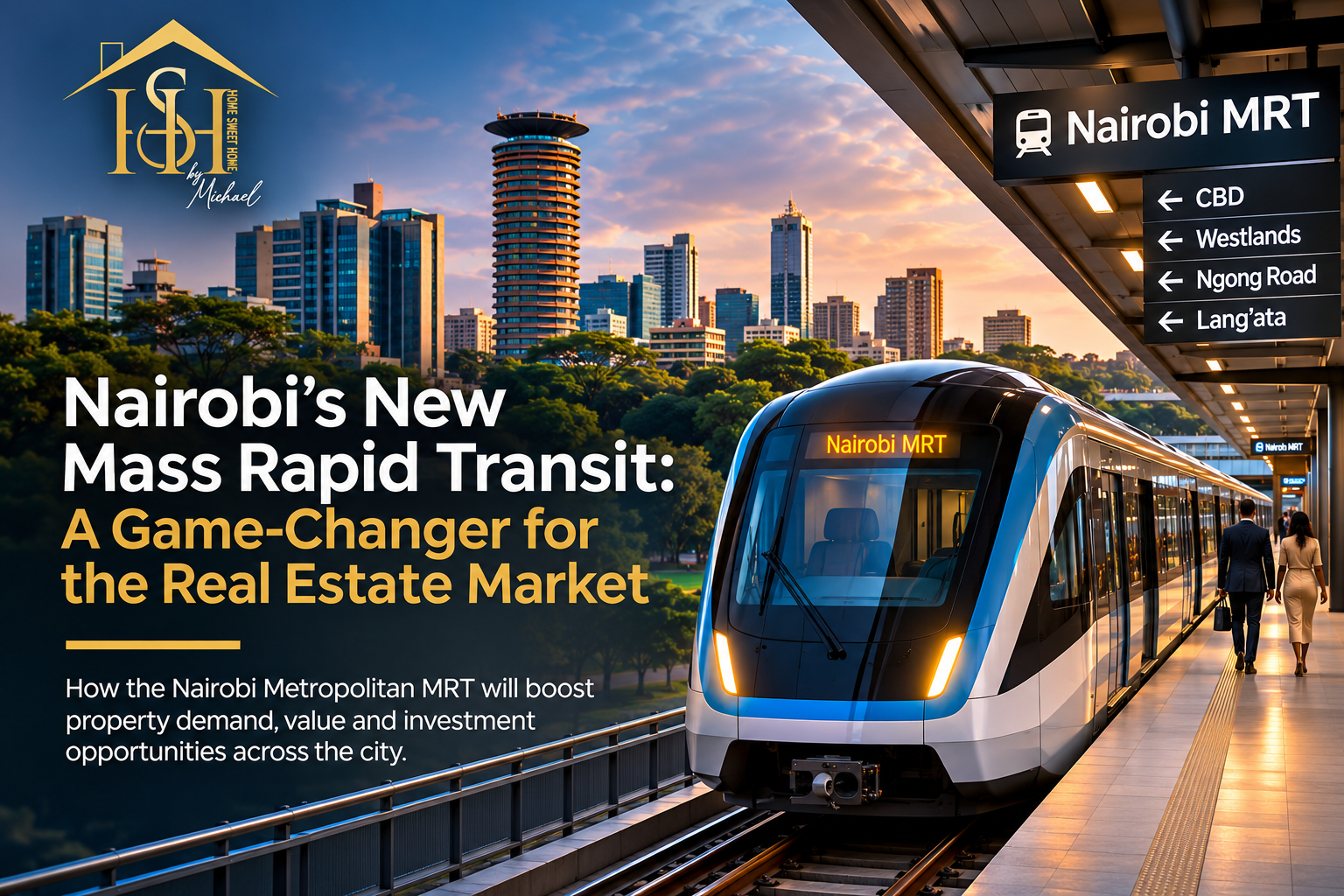
Nairobi Mass Rapid Transit: How the New Metro Could Transform Real Estate
Nairobi is taking an important step towards redefining urban mobility, and the implications could extend far beyond transportation. The proposed Nairobi Metropolitan Mass Rapid Transit System (NMRTS) has the potential to reshape the city's property market, influence residential demand and create new opportunities for property investors, developers and businesses.
For a city where traffic congestion remains one of the biggest challenges facing residents and businesses, improved public transportation could change how people choose where to live, work and invest.
In July 2026, the Nairobi City County Executive Committee, under Governor Johnson Sakaja, approved the implementation framework for Phase I of the Nairobi Metropolitan Mass Rapid Transit System. The proposal was developed in collaboration with the Executive Office of the President, marking a significant milestone in Nairobi's long-term urban transport ambitions.
But what does this mean for Nairobi's real estate market?
Understanding Nairobi's Proposed Mass Rapid Transit System
The Nairobi Metropolitan Mass Rapid Transit System is an ambitious transport initiative designed to improve connectivity across the capital through an integrated public transportation network.
The approved Phase I framework focuses on two major components:
- The CBD Underground Transport Core: A proposed underground transport network through Nairobi's Central Business District, designed to improve commuter movement while easing congestion on surface roads.
- The Eastlands Line: A high-capacity transport connection targeting some of Nairobi's busiest commuter corridors, linking densely populated residential areas with the CBD.
Planning for Phase II is also underway, with proposed extensions towards Westlands, Ngong Road and Lang'ata, while serving growing commuter populations from areas such as Ongata Rongai and Ngong.
The wider vision includes integration with Nairobi's Bus Rapid Transit (BRT) network, creating a more connected transport system.
It is important to note that approval of the Phase I implementation framework does not mean the entire railway network is already under construction. Public participation, stakeholder consultations and further implementation processes remain necessary.
1. Improved Connectivity Could Increase Residential Property Demand
Accessibility is one of the most important considerations when choosing a home.
Many Nairobi residents spend considerable time commuting between residential neighbourhoods and commercial centres. Improved public transport could make daily travel more predictable, affordable and convenient.
As connectivity improves, neighbourhoods that were previously considered less convenient because of distance or traffic congestion could become more attractive to homebuyers and tenants.
For instance, improved connections between Eastlands and the CBD could strengthen the appeal of residential properties in surrounding communities.
This could create opportunities for developers to introduce well-designed apartments, affordable housing and rental developments targeting working professionals and families.
For property investors, accessibility could become an increasingly important factor when evaluating the long-term potential of a residential investment.
2. Properties Near Transport Stations Could Become More Attractive
One of the biggest opportunities associated with modern mass transit systems is transit-oriented development.
This involves creating residential, commercial and mixed-use developments around public transport stations and major interchange points.
As Nairobi's proposed transport network takes shape, locations within convenient walking distance of future stations could attract greater interest from developers, investors and prospective tenants.
Such developments could include:
- Modern residential apartments.
- Mixed-use developments combining retail and residential spaces.
- Commercial office buildings.
- Shopping centres and neighbourhood retail spaces.
- Student and affordable rental accommodation.
Properties offering convenient access to transport, shopping, workplaces and essential services could gain a competitive advantage.
However, proximity alone does not guarantee higher property values. Actual accessibility, station locations, surrounding infrastructure and the quality of the development will all matter.
3. Increased Investment Opportunities in Eastlands
Eastlands represents one of the most interesting areas to watch as Nairobi develops its mass transit infrastructure.
The proposed Eastlands transport corridor could improve connectivity between densely populated residential communities and the CBD.
Areas such as Dandora, Donholm, Umoja, Buruburu, Embakasi and neighbouring communities deserve attention as the wider transport network is planned.
Improved accessibility could support demand for:
- Affordable residential apartments.
- Mid-market housing developments.
- Rental properties targeting working professionals.
- Student accommodation.
- Neighbourhood retail and commercial developments.
For developers, better connectivity could make strategically located land more attractive for residential and mixed-use projects.
For investors, the opportunity lies in identifying properties with strong fundamentals before improved transport access becomes fully operational.
4. A Potential Boost for Nairobi's Commercial Real Estate Market
The benefits of mass transit are not limited to residential property.
Businesses also depend on accessibility. Employees, customers, suppliers and clients need convenient ways to reach commercial premises.
A more efficient public transportation network could strengthen the attractiveness of commercial locations, particularly around major transport interchanges.
The CBD could benefit from improved commuter accessibility, while proposed connections towards Westlands, Ngong Road and Lang'ata could support business activity across additional commercial corridors.
Potential opportunities include:
- Office developments.
- Retail centres and shopping complexes.
- Restaurants and hospitality businesses.
- Medical and professional facilities.
- Co-working spaces.
- Mixed-use commercial developments.
Improved mobility could also support the regeneration of parts of the CBD by making the area more accessible to residents, employees and visitors.
5. Greater Potential for Rental Demand and Property Management
A more connected Nairobi could influence where people choose to rent.
Working professionals may increasingly consider neighbourhoods outside traditional prime residential locations if they offer convenient access to employment centres through reliable public transport.
This could create opportunities for landlords offering:
- Affordable one- and two-bedroom apartments.
- Furnished accommodation.
- Executive rental apartments.
- Family-oriented residential units.
- Accommodation targeting students and young professionals.
For property management companies, this could translate into opportunities to manage more residential developments, attract tenants and provide professional property management services.
Investors should nevertheless assess rental affordability, competing supply, service charges and actual tenant demand rather than relying exclusively on proposed infrastructure improvements.
6. Potential Growth in Property Values and Land Investment
Infrastructure development has historically played an important role in shaping urban property markets.
When an area becomes easier to access, it can attract new businesses, residential developments and additional economic activity.
Over time, these changes may increase demand for strategically located land and completed properties.
Nairobi's proposed mass transit network could therefore create opportunities for early-stage land acquisition, residential development and long-term property investment.
However, appreciation is not guaranteed. Property values will depend on whether the proposed infrastructure is funded, constructed and operational, as well as local land-use regulations, supply levels and economic conditions.
Investors should prioritise locations supported by credible infrastructure plans rather than purchasing land based solely on speculative announcements.
7. Supporting Nairobi's Long-Term Urban Development
Beyond property prices and rental demand, mass transit could contribute to a more sustainable urban environment.
A well-integrated public transportation system can reduce dependence on private vehicles, ease road congestion and improve access to employment and essential services.
The wider Nairobi Railway City initiative also demonstrates the potential of integrating transport infrastructure with urban redevelopment.
According to Kenya Railways, the proposed 438-acre Nairobi Railway City development is designed around integrated transport, commercial activity, housing and improved public spaces.
These initiatives reflect a broader shift towards more connected and efficiently planned urban environments.
For Nairobi's real estate sector, this could encourage developers to think beyond individual apartment buildings and focus on integrated communities that combine housing, accessibility, retail and lifestyle amenities.
What Should Property Investors Watch?
As Nairobi progresses towards modernising its transport infrastructure, investors should pay attention to several factors:
- Official station locations: Properties close to confirmed transport stations and interchange points may have stronger accessibility advantages.
- Infrastructure implementation: Monitor funding arrangements, procurement, construction timelines and official project updates.
- Land-use regulations: Understand zoning requirements and development permissions before purchasing land.
- Rental demand: Assess the type of tenants likely to benefit from improved connectivity.
- Development supply: Consider competing projects and the possibility of oversupply in particular neighbourhoods.
- Long-term investment potential: Evaluate accessibility alongside property quality, pricing, rental yields and resale prospects.
The strongest opportunities will likely be found where improved transportation connects with existing employment centres, residential demand and supporting amenities.
The Bigger Picture: A New Chapter for Nairobi Real Estate
Nairobi's proposed Mass Rapid Transit System represents more than a transportation initiative. It is an opportunity to rethink how the city grows, how residential communities connect with commercial centres and how infrastructure can support long-term economic development.
If successfully implemented, the network could make previously overlooked neighbourhoods more attractive, strengthen established commercial centres and create new opportunities for residential and commercial property investment.
For developers, it presents an opportunity to plan projects around future accessibility. For landlords, it could open up new rental markets. For investors, it provides a reason to look more closely at neighbourhoods positioned to benefit from improved connectivity.
At Home Sweet Home Real Estate, we believe that understanding infrastructure developments is an important part of making informed property investment decisions.
As Nairobi continues to evolve, the relationship between connectivity, location and property demand will become increasingly important.
The future of real estate will not only be about where a property is located, but also how easily people can access it.
Thinking of investing in Nairobi real estate? Home Sweet Home Real Estate can help you identify residential and commercial property opportunities, evaluate locations and make informed property decisions.
Home Sweet Home Real Estate
Your trusted partner in property investment, sales, rentals and property management.
Website: www.homesweethome.co.ke
Ready to make a move?
Browse our developments or chat with the team.